

What Coaches Wish Parents Knew About Athlete Academics
This might surprise some families.
Most coaches care deeply about their athletes' academics.
They just don't always have the time or ability to manage them.
That gap between caring and managing is where a lot of confusion starts. And once the confusion sets in, it tends to grow quietly until it becomes a real problem for the athlete caught in the middle.
Where Misunderstandings Happen
Parents sometimes assume coaches are not paying attention to academics. If a grade slips and no one from the coaching staff says anything, it is easy for families to conclude that school performance is not on anyone's radar.
Coaches frequently think that parents are taking care of everything because they have so many other commitments. Their focus is on coaching, training, scheduling, team and player development; however, little time is available to monitor academics. Coaches typically do not see academics as part of their job and because of this coaches at the high school level only usually have time to monitor a roster of 20-30 players' academic performance - high school coaches often have up to 30+ players in total unless they have multiple teams.
Meanwhile, the athlete is stuck in the middle trying to juggle everything.
Nobody is being careless. But when two parties each assume the other one is watching, things fall through the cracks. That is where things get messy.
What Coaches Really Want
Coaches want athletes who are eligible, responsible, and able to manage their commitments.
This sounds like a straightforward statement - academically not only fails to provide an athlete with a good grade but also tells me about the athlete's ability to manage time and finish what they began. When a coach sees any athlete consistently missing assignments or getting behind in their studies, that coach begins to question if the athlete will be dependable enough to show up ready to play, follow the coaches' game plans and perform under pressure.
In a coach's mind, the academic and athletic portions of an athlete's life are much more interconnected than many parents believe. When an athlete struggles academically, that struggle often carries over into their athletic performance.
Coaches typically do not have the ability (or time) to keep track of every athlete's transcript, check grade portals or follow up weekly on how an athlete is progressing in their studies. That isn't a coach not doing their job; it is simply part of the inherent reality of being a coach. That being said, the academic accountability must lie with someone other than the coach.

The Athlete's Perspective
Athletes often feel torn. They want to meet expectations on all sides and do not always know how to ask for help when they are struggling.
They do not want to tell their coach that school is slipping because they worry about losing playing time or trust. They do not want to tell their parents because they do not want to create stress at home. So they carry it quietly, trying to fix it on their own, and that pressure can quietly build until it becomes something much harder to manage.
This is one of the most common patterns we see. The athlete who seemed fine until suddenly they were not.
Alignment Changes Everything
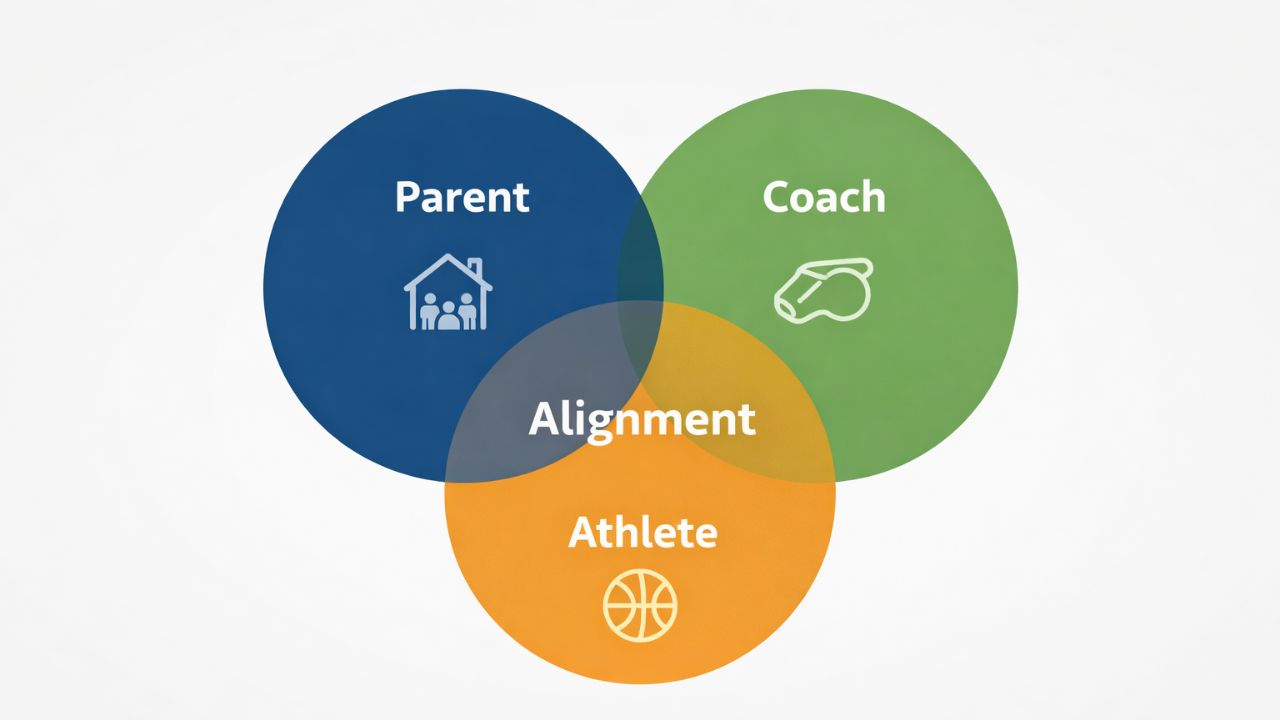
When parents, coaches, and athletes are aligned, stress drops noticeably.
Expectations are clearer. Communication improves. Athletes feel supported instead of pulled in different directions by people who all want the best for them but are not on the same page about how to get there.
That alignment does not require weekly meetings or detailed academic reports going back and forth. It simply requires that everyone understands the same basic picture: where the athlete stands academically, what is expected, and who is responsible for what.
When that clarity exists, small problems get addressed before they become big ones.
This Does Not Mean Over Communicating
Alignment does not mean constant emails or updates to coaching staff. Most coaches do not want that and it is not realistic to expect it.
It means having systems in place so academics do not become a last minute issue that surprises everyone at once. It means the athlete is not the only one holding the full picture. And it means that when something does come up, there is already a foundation of communication to build on rather than starting from scratch in the middle of a crisis.
Our Role
At Carpe Diem Academics, we help create that alignment. We support athletes academically while respecting the athletic demands they face every week.
We are not here to add more pressure. We are here to reduce it by making sure the academic side of an athlete's life has structure, support, and someone paying close attention.
When everyone understands the plan, school becomes part of the process instead of a source of stress. And the athlete gets to focus on both things they came here to do: compete and grow.
When parents, coaches, and athletes are aligned, everyone wins.