
Executive Functioning Skills Every Student Athlete Needs
This is something we see all the time.
A student athlete is smart, motivated, and capable, yet school feels way harder than it should. Assignments pile up. Deadlines sneak up. Stress levels are high.
Parents often say, "They're doing great in their sport, so why is school such a struggle?"
The answer is usually executive functioning.
What Executive Functioning Actually Is
Executive functioning includes skills like:
Planning ahead
Estimating how long things will take
Starting tasks without procrastinating
Staying organized
Sports build discipline, grit, and work ethic. They do not always build planning and organization skills. And that's okay.
The brain's executive functioning system is similar to a manager that helps keep your brain organized by breaking big tasks into smaller components and remembering deadlines, prioritizing tasks and managing them all; additionally, following through with tasks, even if you don't feel like it, is an essential part of executive functioning skills.
Executive functioning skills are essential when determining whether or not you will start to work on a research paper between September and November. For example, executive functioning skills help you gauge that the research paper is due on the same day that the examined paper is due.
For athletes, there's an extra layer. Their sport already has structure built in. Coaches tell them when to show up, what drills to run, how to prepare for the next game. School doesn't work that way. Students are expected to manage everything themselves, and that's where things start to fall apart.

Why This Shows Up in School
Without strong executive functioning skills, athletes often:
Underestimate how long assignments will take
Put things off until the last minute
Feel constantly behind even when they are working hard
This leads to stress, frustration, and a lot of unnecessary self doubt.
Let's consider this scenario: An athlete finishes practice at 8 pm. They have 3 pieces of homework: a worksheet for math, some reading for history, and studying for a quiz in Spanish. After a long day of practice, the athlete estimates that it will only take them 20 minutes to complete their math homework.
However, after working for 2 hours, they are still working on problem #12 of their math homework; they still haven't finished their history reading; and they haven't even opened their Spanish notes. It's now 10:30 pm, and the athlete is feeling tired, frustrated because they are starting to think they are not doing well in school or performing well academically.
This wasn't really a result of the homework itself but rather an issue with estimating the time it will take to finish the homework itself. They did not consider how long it would take to focus after a long day of practice; how much time it would take to reread some of the homework; or that they would get stuck and need to look up examples in the text or online.
This situation occurs frequently and is not based on intelligence or effort but rather based on a gap in executive functioning skills.
This Is Not a Motivation Issue
This part is important.
Most athletes struggling here are not lazy or unmotivated. They just don't yet have the systems they need.
Once those systems are in place, things start to click.
We've worked with so many student athletes who've been told, directly or indirectly, that they just need to "try harder" or "care more" about school. And that message is not only unhelpful, it's wrong.
These are kids who wake up at 5 am for training. Who pushes through injuries. Who spend hours perfecting their craft. If anything, they have more motivation and discipline than most.
What they're missing is structure. They need a system for breaking assignments into steps. A way to track what's due and when. A method for prioritizing tasks when everything feels urgent. A process for getting started when the task feels overwhelming.
None of this comes naturally, and that's completely normal. The good news is that it can absolutely be learned.
The Good News
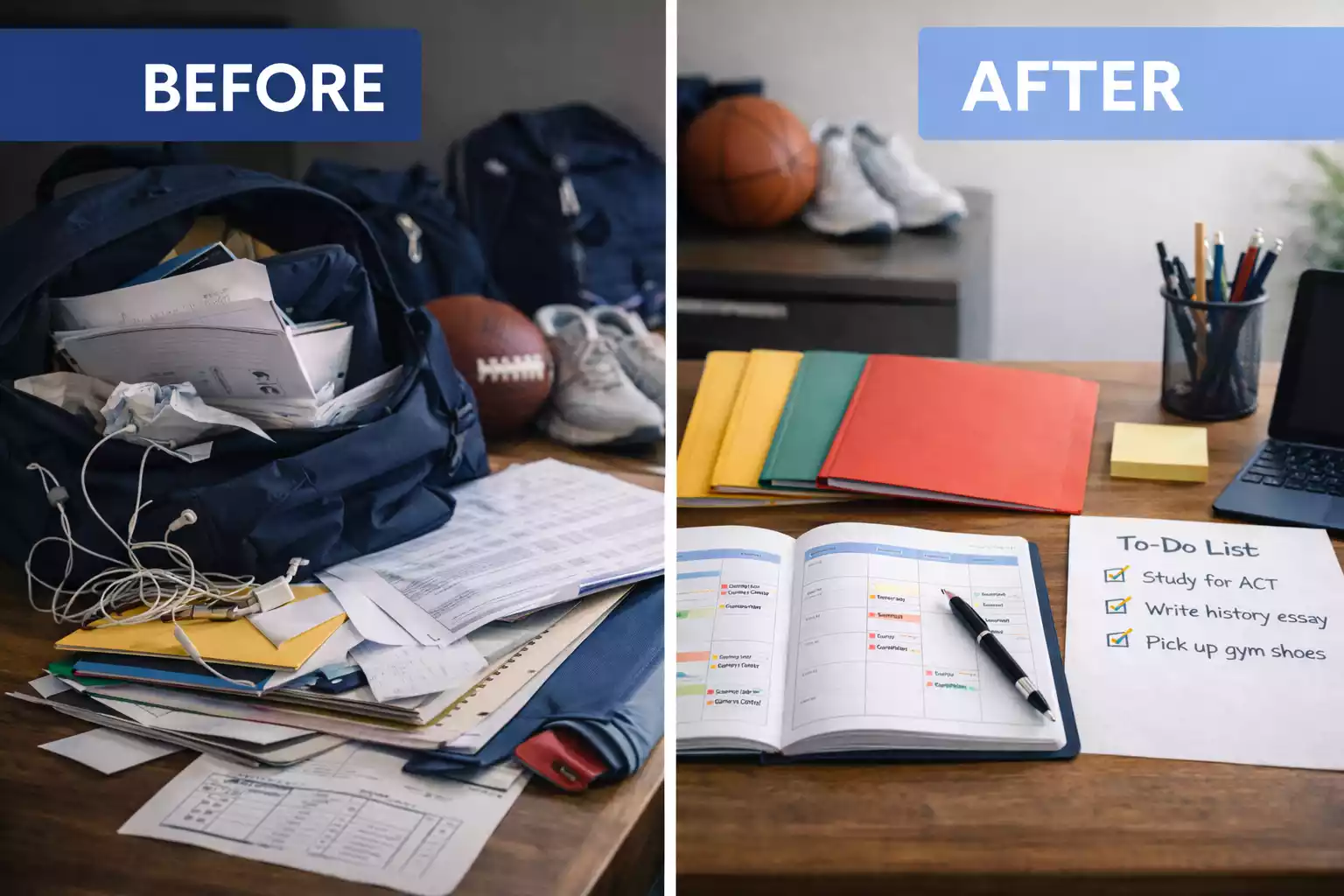
Executive functioning skills are teachable.
With structure, repetition, and accountability, athletes can absolutely learn how to plan better, manage their time, and stay on top of their work.
And when they do, school feels lighter.
Here's what we mean by teachable. It's not about sitting down for a lecture on "how to be organized." It's about building habits through practice and support.
It could be sitting down every Sunday to create a plan for the following week or using a planner that makes sense based on how their mind works. Also, it's establishing a system where assignments are completed in smaller chunks with smaller deadlines instead of one large deadline.
It is to ask themselves, "What is the next smallest step I can take?" instead of looking at a large project and feeling overwhelmed.
It becomes a habit for them to begin tasks, even when they don't feel like, since they have figured out that when they create momentum, everything is much easier.
These behaviours develop over time when they receive guidance and have plenty of practice. When the above behaviours are developed, then everything is different. School no longer feels as though it is an uphill struggle and it begins to feel manageable.
Our Approach
At Carpe Diem Academics, executive functioning is not an extra add on. It's part of the foundation.
We help athletes build systems that support their academic life the same way training plans support their athletic life.
Once those systems are in place, everything feels more manageable. And yes, nothing feels like that big of a deal anymore.
Think about it. Athletes don't just show up to practice and wing it. They follow a plan. They track their progress. They work on specific skills. They get feedback from coaches who help them adjust and improve.
Why should school be any different?
We bring that same structure to academics. We help athletes set up planning systems that work for them, not against them. We teach them how to estimate time realistically, prioritize effectively, and build routines that reduce stress instead of adding to it.
And we provide the accountability that makes it all stick. Because knowing what to do and actually doing it consistently are two very different things.
Executive functioning skills can absolutely be taught, and we build them into everything we do.