
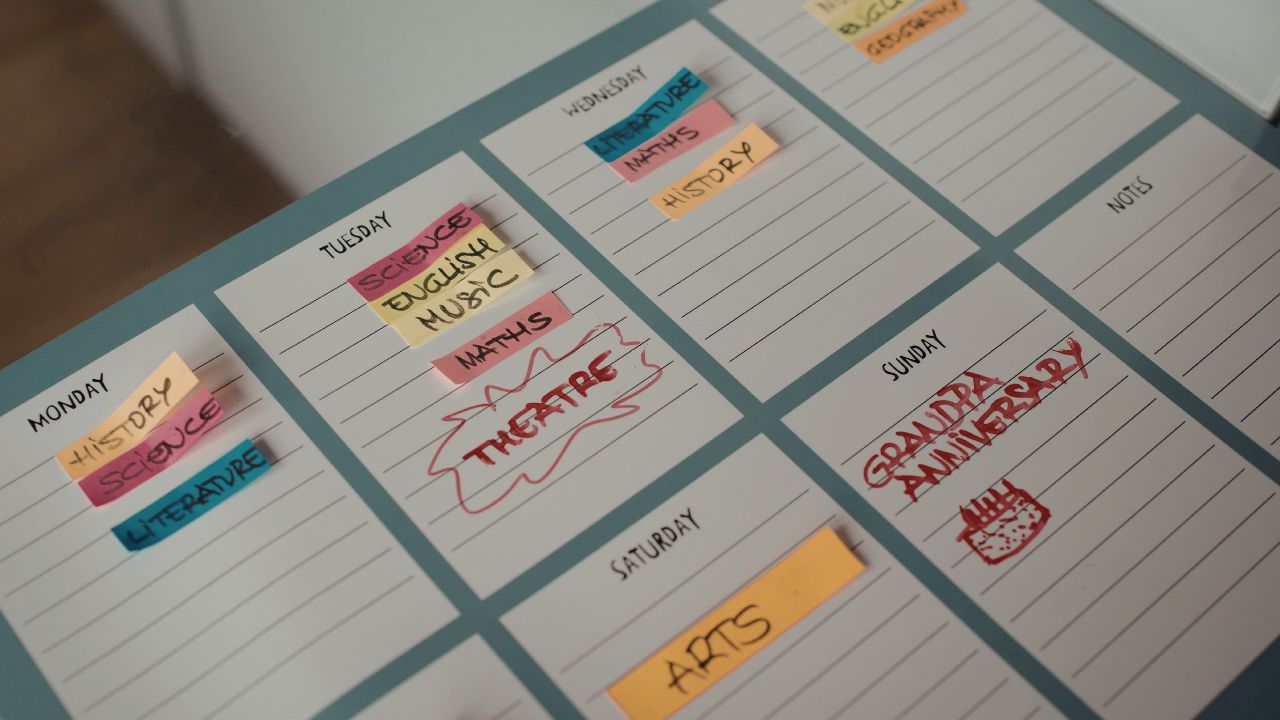
The Ideal Weekly Study Schedule for Busy Student Athletes
Let's be honest.
Most study schedules were not made for student athletes.
They assume kids come home early, feel refreshed, and happily sit down to do homework. If that made you laugh, you're in the right place.
If practice ends at 8 or 9 pm, expecting hours of focused studying afterward is just not realistic. And that is okay.

Why Most Schedules Fail
Traditional schedules ignore:
Mental fatigue
Physical exhaustion
The reality of long practices
Athletes do not need stricter schedules. They need smarter ones.
The truth is, a student athlete's day looks completely different from a regular student's routine. Between morning conditioning, full school days, afternoon practices, team meetings, and games, there is barely any time left to breathe, let alone tackle complex assignments or prepare for exams.
This is why cookie cutter planners and generic productivity tips often fall flat. They were designed for students with predictable schedules and steady energy levels throughout the day. Student athletes need a homework routine for athletes that respects their unique challenges and works around their commitments, not against them.
Practice Days Versus Lighter Days
On heavy practice days, the goal is:
Short study sessions
Focusing on what is due soon
Saving heavy thinking for later
On lighter days or weekends:
Longer focus blocks
Test prep
Planning ahead
This one shift alone can make a huge difference.
Think about it. Asking your brain to solve calculus problems or write an essay after two hours of intense physical training is like asking a phone on 5% battery to run multiple apps at once. It might work for a few minutes, but it will crash soon.
Instead, use high energy windows wisely. If there is a free period at school or a light morning before practice, knock out tasks that require deep focus. Save review work, reading assignments, or organizing notes for post practice hours when your body is tired but your mind can still function on a lighter level.
A Simple Weekly Flow
Monday through Thursday: short focused sessions
Friday: very light academic work
Weekend: deeper work and planning
Nothing fancy. Just realistic.
This framework gives structure without adding pressure. Fridays become a mental reset day where athletes can wrap up small tasks and recharge before the weekend. Weekends offer the flexibility to dive into bigger projects, catch up on readings, or get ahead on upcoming assignments without the stress of an early wake up call the next morning.
Time management for students who are also athletes is not about doing more. It is about doing what matters most when you actually have the energy to do it well.
When Energy Is Low
Starting is usually the hardest part. A short break, a snack, and a clear first task go a long way.
Sometimes, all it takes is five minutes of momentum to shift gears from athlete mode to student mode. Keep it simple. Grab a healthy snack, take a quick shower, and sit down with one specific task in front of you. Not your entire to do list. Just one thing.
This approach builds confidence and reduces overwhelm. Once that first task is done, the next one feels easier.

How We Help
We help athletes build schedules that work with their energy instead of fighting it. When the plan makes sense, consistency follows.
Student athlete planning should never feel like punishment. It should feel like a tool that helps you show up as your best self, both in the classroom and on the field.
If your athlete needs help building and sticking to a weekly plan, this is exactly what we do inside our academic coaching programs.